A consensus price forecast strives to evaluate the wisdom of the crowd. However, the LBMA Annual Precious Metals Forecast Survey seeks the individual analyst who makes the most accurate market price forecast for that given year, identifying the wisdom IN the crowd.
How do surveys serve as consensus forecasts for metal prices?
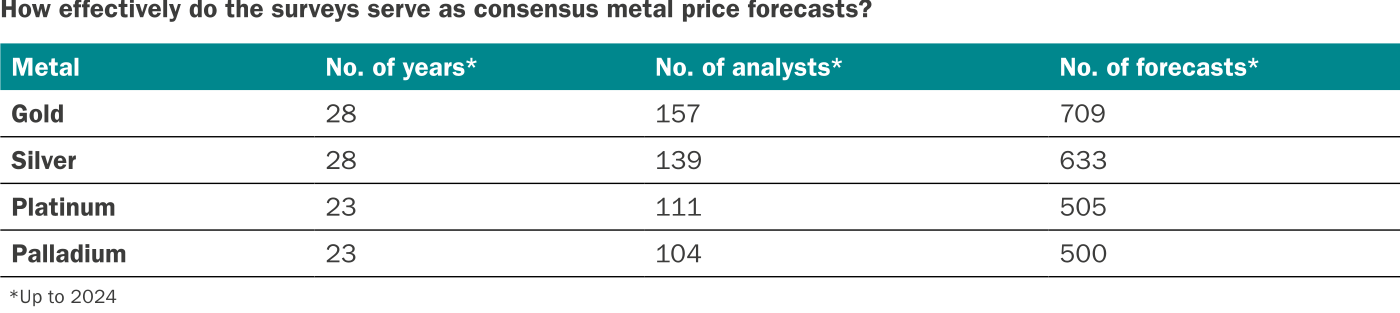
Accuracy of consensus forecasts
Examining forecast survey data from 1997 to 2024, the aggregate consensus estimates of analysts’ market price forecasts align favorably with the LBMA average market prices for the respective metals.
The difference between the consensus median for all years of the LBMA forecast survey and comparable average market prices for all metals was approximately 1%, an incredibly close match, with similar results for the consensus mean. The respective average market price and consensus median for all years were:
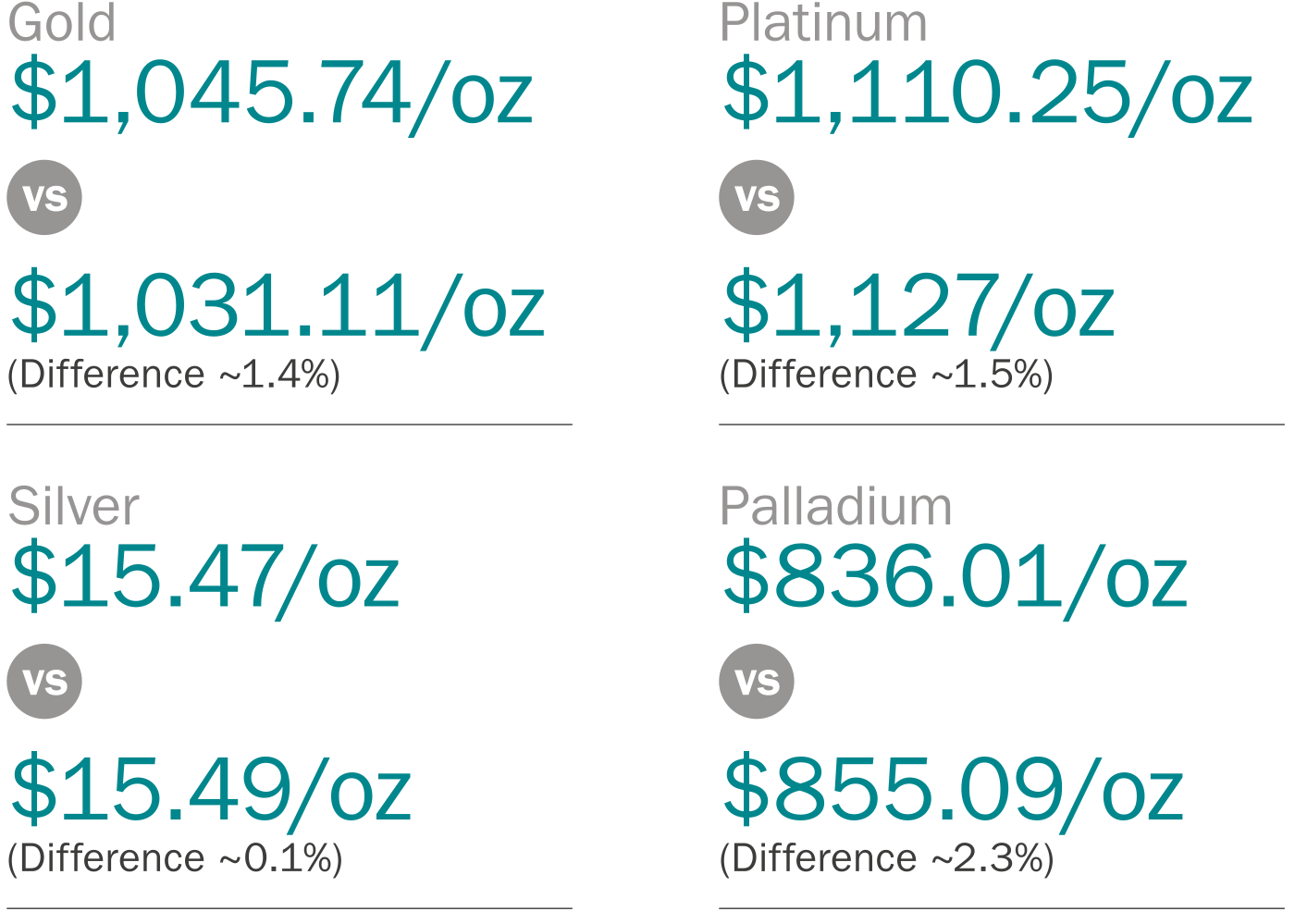
The aggregate comparison would, in theory, support consensus estimates as reliable forecasts of future LBMA market prices.
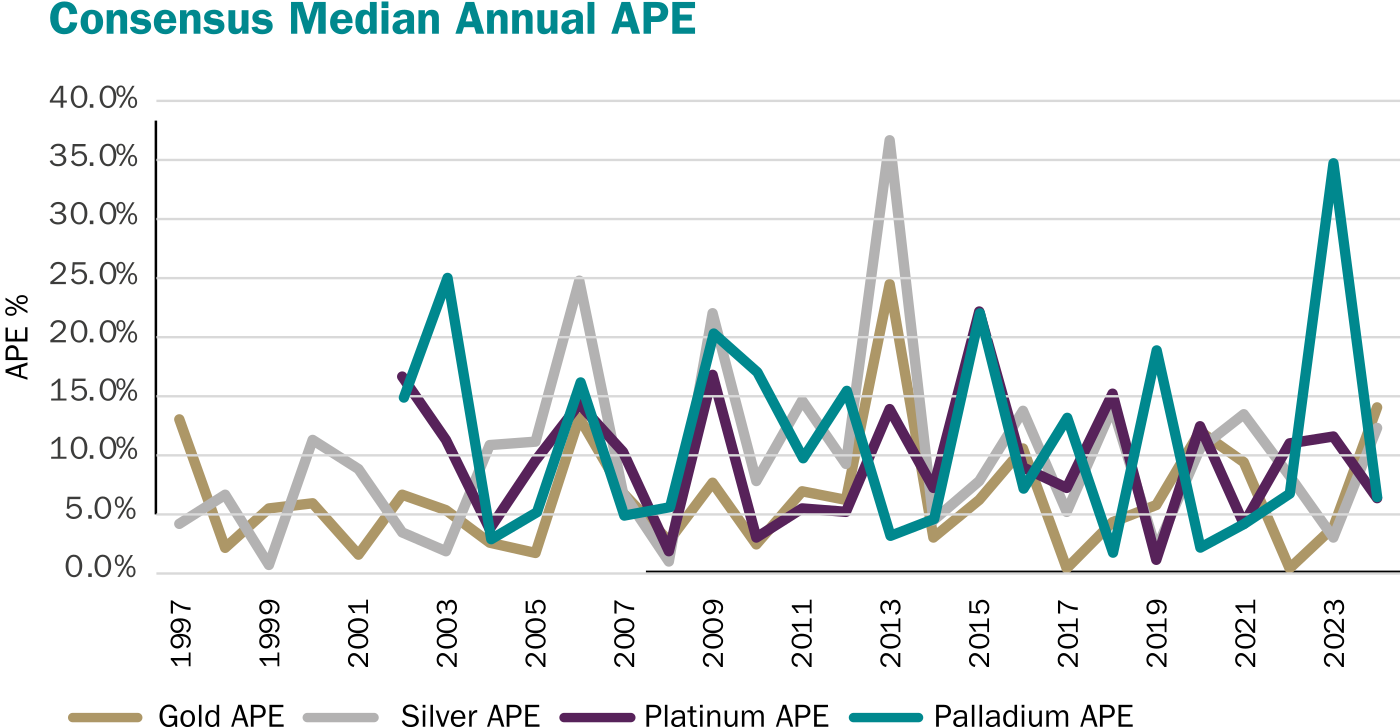
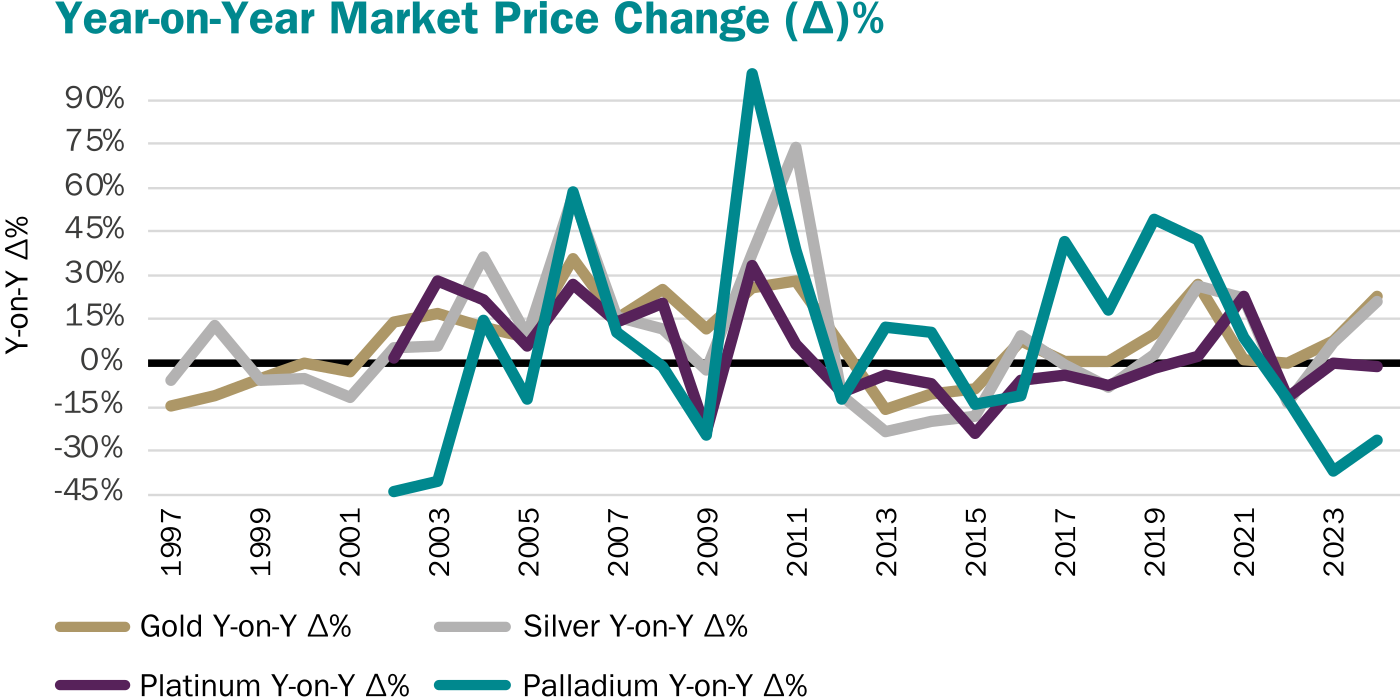
However, when considering the distribution of forecast errors in individual years, the results are less convincing. The following charts show the absolute percentage error (APE) of the consensus median and year-on-year market price changes, with an average APE of approximately 9%, highlighting the difficulty in predicting future market prices:
Reliability of consensus estimates
When we recommend using a central estimate, such as the median or mean, we assume that forecast errors will be approximately balanced: some forecasts will be too high, while others will be too low, but they will mostly cancel each other out. However, this balanced model has not occurred every year. In many cases, errors were skewed in one direction, predominantly above or below the actual market price.
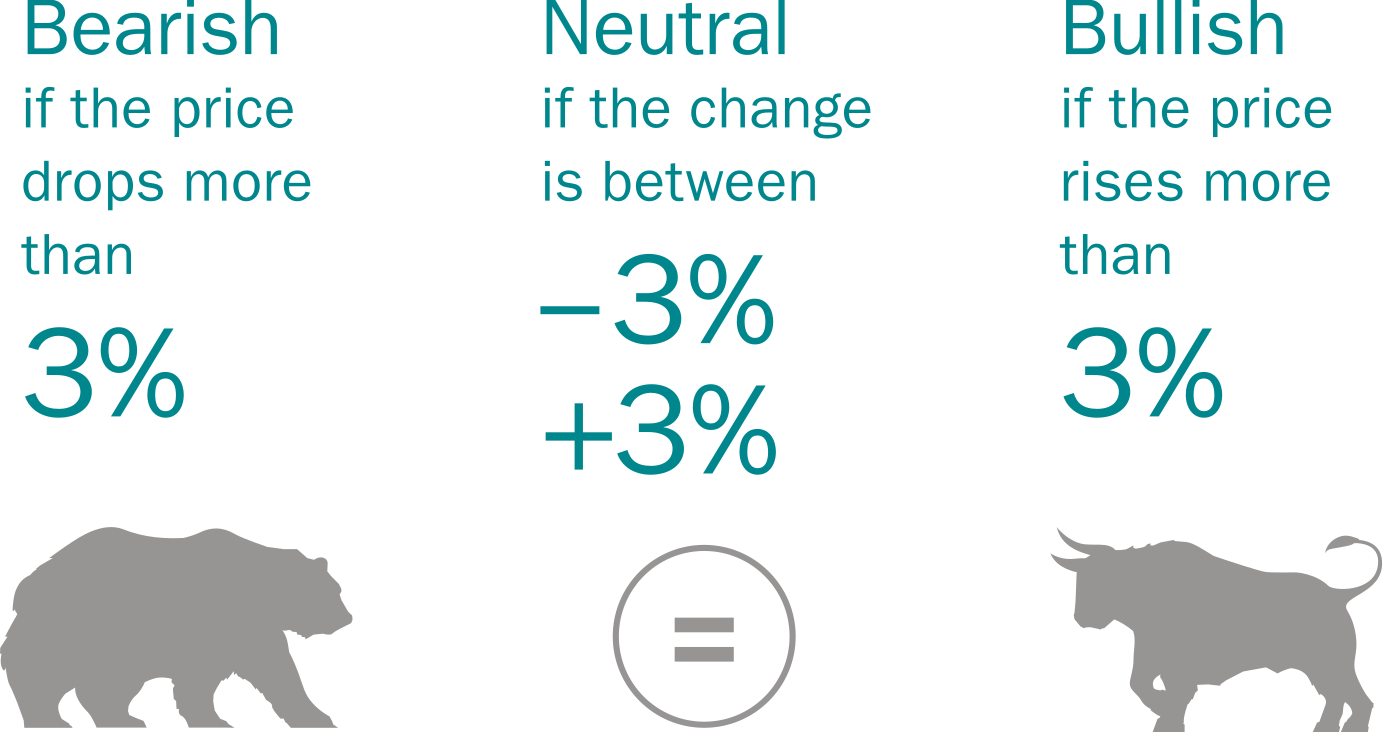
Market prices typically fluctuate, although they occasionally remain relatively stable. To facilitate the classification of these changes, a simple 3% threshold is used:
The skewed distribution of analyst forecasts relative to market price changes is shown below:
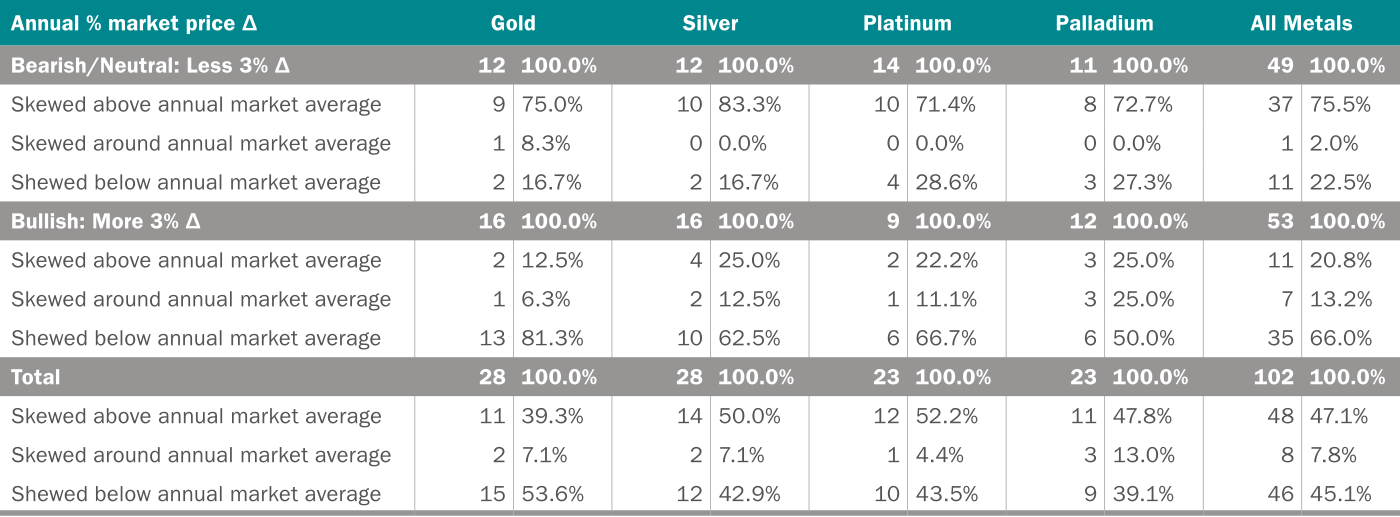
Clustering around the market average accounted for only ~8% of the years for which analysts submitted forecasts for the LBMA survey.
Most forecasts were either mostly higher or mostly lower than the actual market average. In general, when the market price decreased during the year, analysts tended to overestimate the change, predicting prices that were too high. On the other hand, when the market price increased significantly, they tended to underestimate the change, predicting prices that were too low.
The way past analyst forecasts have been skewed relative to actual market changes highlights the importance of verifying which type of consensus estimate is most accurate. The following table shows which consensus estimate was the most reliable during bearish/neutral and bullish market conditions:
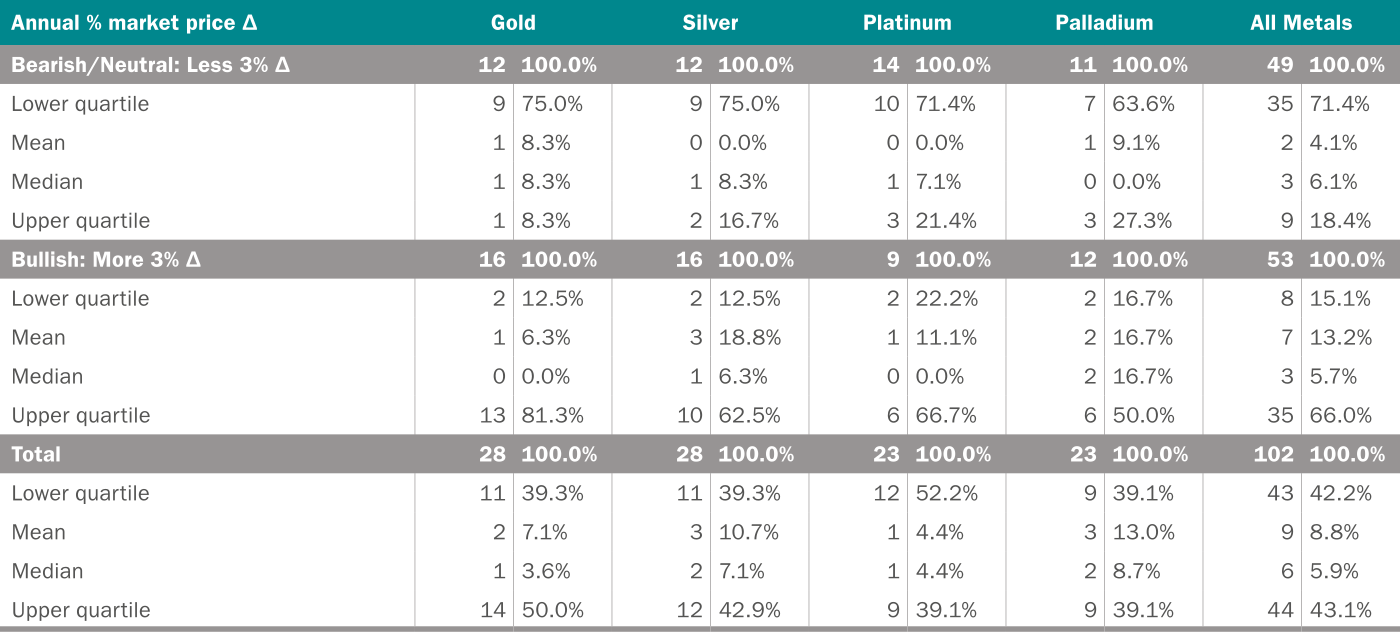
In years when the market was bearish or neutral, the lower quartile provided the most accurate forecast about 71% of the time. In bullish years, the upper quartile was the most accurate in about 66% of cases. In comparison, the median (about 6%) and the mean (about 9%) were the most accurate significantly less frequently.
Based on the observed asymmetry of analyst forecasts relative to subsequent market price changes, a general rule of thumb for choosing the most reliable consensus estimate is proposed as follows:
- For expected market price increases of less than 3% (bearish/neutral), the lower quartile is likely to be the most reliable consensus estimate.
- For expected market price increases of more than 3% (bullish): the upper quartile is likely to be the most reliable consensus estimate.
The increased accuracy in using the lower or upper quartiles depends on correctly guessing which direction the market will move. When most analysts expected a bullish year, they were right about 89% of the time. For bearish or neutral years, their accuracy dropped to about 57%. Overall, about 81% of analysts correctly predicted rising prices and about 69% correctly predicted falling prices.
Conclusion
Overall, about 34% of survey analysts were more accurate than the median forecast. A smaller group, about 18%, was more accurate than the lower or upper quartile forecasts, based on actual market price changes. Participating in more surveys offers the chance to outperform consensus measures. However, for analysts who participated for more than ten years, ~17% were, on average, more accurate than the median and a lower 11% were more accurate than the lower or upper quartile forecasts, based on actual market price changes. Research has shown that while individual analysts can be accurate, the “wisdom of the crowd” generally provides a more reliable estimate. Arguably, the best consensus is not always the median or the mean: it can be the lower or upper quartile, depending on whether market prices rise or fall.
Postscript
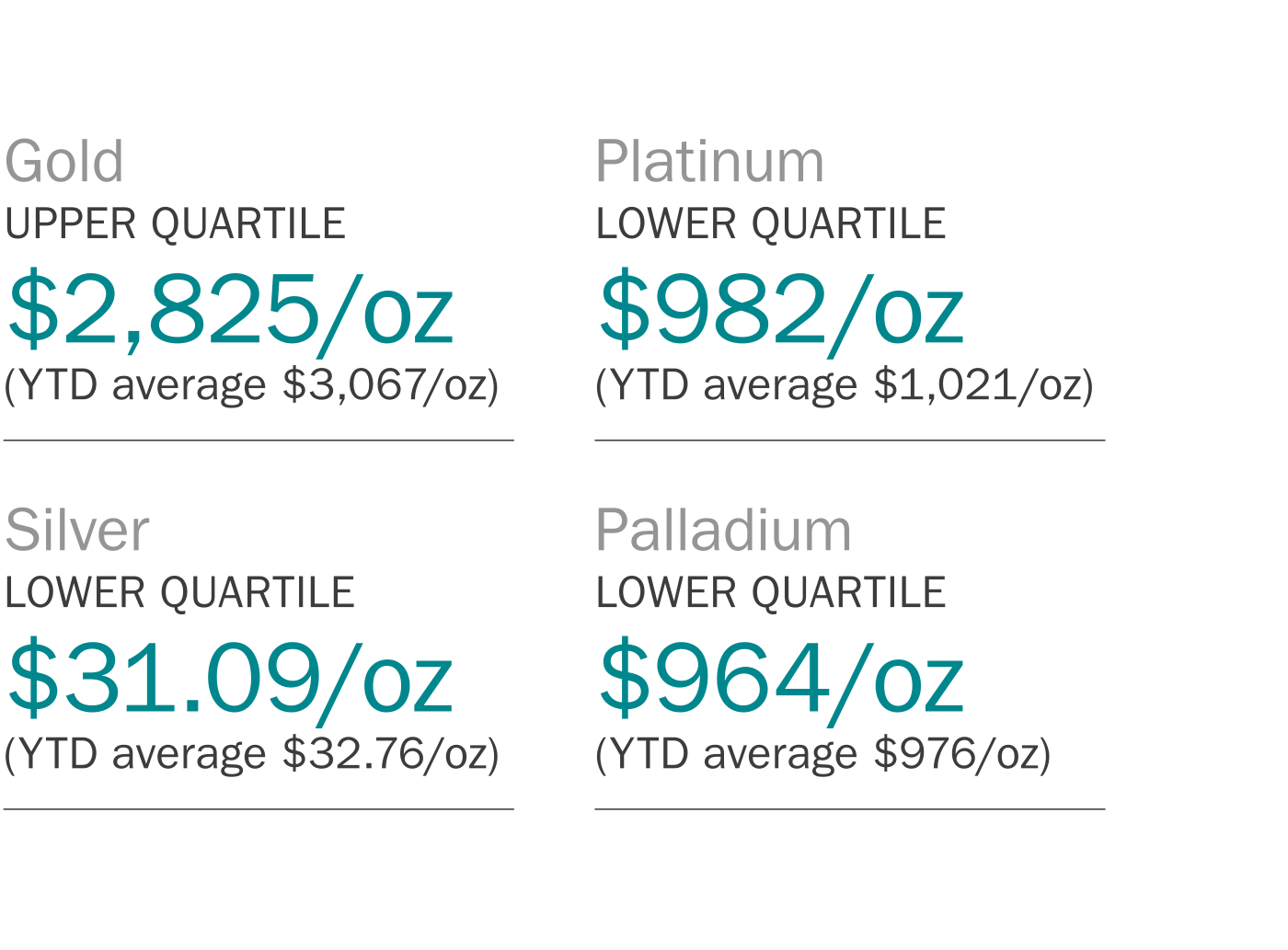
Based on year-to-date 2025 average metal prices (June 2025), the proposed rule of thumb – 2025 LBMA Annual Precious Metals Forecast Survey, most reliable consensus estimate: